
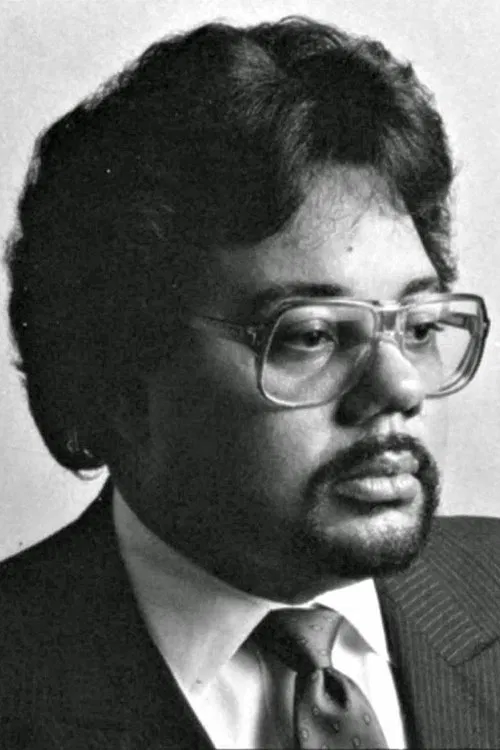
The Douglas County Grand Jury was impaneled on March 19, 1990. The grand jury was called and charged to look into the illegal activity surrounding the closure of the Franklin Community Federal Credit Union, its members, officers, employees, and particularly the individual who headed that organization, Lawrence E. King, Jr.
We considered the financial operation of Franklin and the shortage of approximately $40 million. However, since the Federal Grand Jury has considered those issues for nearly two years, and has already issued indictments, and since the National Credit Union Association reconstruction team has labored over 10,600 hours, we decided not to duplicate those worthwhile efforts. Inappropriate expenditures were considered as a possible lead, or trail, to improper activity respecting drugs, pornography, and illicit sexual activity.
We initially considered allegations of abuse by King’s cousin, Barbara Webb, and her husband, Jarrett Webb in their foster care home in Washington County. We next reviewed allegations by a young Omaha girl of illicit drug, sex and cult activities. We considered the response to both situations by all law enforcement and social service agencies.
Finally, we considered evidence relating to a possible adult male prostitution ring operation throughout the country by Franklin principals, and a possible income tax scheme used by an affluent Omahan to finance male homosexual prostitution. All of the above necessitated our studying satanic and pedophile activity in eastern Nebraska, particularly the Omaha metropolitan area.
When we concluded our investigation, we had met for 82 days, reviewed 395 exhibits, issued 136 subpoenas, heard live testimony from 76 witnesses, watched over 30 hours of videotapes and listened to numerous audiotapes. The following report reflects the findings of the Douglas County Grand Jury:
I. Franklin Credit Union
The Franklin Community Federal Credit Union was established December 31, 1968. King became its principal executive in August of 1970. Its home office was at 1723 N. 33rd Street in North Omaha, where it served primarily minority clientele. In June of 1985, following a community-wide fund raising effort, an expanded facility was opened. A branch office was opened in South Omaha at 2429 M St. An affiliate entity, the Consumer Services Organization, provided a variety of social and client support programs. The Franklin Community Federal Credit Union was closed November 4, 1988.
Lawrence E. King Jr.
The Grand Jury listened to considerable testimony regarding King’s relationship to the Franklin Community Federal Credit Union. The case arose out of sexual allegations, primarily of a homosexual nature, involving King. We found no credible evidence of child sexual abuse, interstate transportation of minors, drug trafficking or participation in a pornography ring by King or other Franklin officials and employees. To the extent that homosexual relations occurred involving employees or officials, the evidence we were able to uncover showed these exchanges to be voluntary acts between persons above the age of consent.
We recognize that King did illegally use credit union monies for his personal gain. He spent this money lavishly on his family, friends, lovers, and those acquaintances who could help King politically or otherwise. Purchases or leases of furniture, automobiles, apartments, travel, and clothing were made with Franklin funds. We did find evidence to show probable cause to believe that theft offenses were committed by King. However, it is our opinion that federal authorities are better able to pursue matters regarding this misappropriation of credit union funds, and we strongly recommend that they continue to do so.
We also found probable cause to believe that King, on numerous occasions, used money or items of value to “entice, inveigle, persuade, encourage or procure” men in their late teens or early twenties to engage in acts of prostitution with him, and, therefore, he committed the crime of pandering. Most of these activities occurred in the early 1980s. However, one or more of these offenses have not been barred by the applicable statue of limitations. Nevertheless, our ultimate decision was that to charge and try King with a Class IV felony under state law when he is facing 40 felony counts in federal court would not be the best use of the resources of the Douglas County District Court, and again we have deferred to the federal prosecution. Should the matters pending against King in the federal system come to naught, we implore state authorities to act upon the overwhelming evidence against King relating to both pandering and theft offenses.
Evidence and testimony heard regarding the issue of King’s incompetence to stand trial for his crimes have shown much disagreement with the incompetency ruling. However, we did not have the benefit of any psychiatric evaluations performed on King. Almost without exception, friends, acquaintances, and former employees maintained that King is without a doubt mentally capable of standing trial and assisting in his own defense. King was uniformly regarded as a very clever and manipulative person.
(Because King is presently in an institution out of the state pursuant to an order from the federal court, and because we believed he would rely on his right against self-incrimination mandated by both state statutes and the Constitution, we decided it would not be fruitful to attempt to require King to appear before us. Therefore, the Grand Jury requested King to appear voluntarily, but he declined to do so.)
Alice Ploche King
The Douglas County Grand Jury made an attempt to interview Mrs. King. She chose to take the Fifth Amendment and did not appear before this Grand Jury. From what we can determine, Mrs. King was intimidated by king mentally and physically, and as a result did whatever she was directed to do by her husband. The Douglas County Grand Jury found no improper sexual misconduct by Mrs. King. The Federal Grand Jury is investigating issues relating to misappropriation of funds by Mrs. King.
II. The Rumormongers.
“Rumor is a pipe, blown by surmises, jealousies, conjectures, and of so easy and so plain a stop that the blunt monster with uncounted heads, the still discordant wavering multitudes, can play upon it.”
Willaim Shakespeare
Henry IV, Party II,
Introduction, line 15
Perhaps never in the history of Douglas County has the discordant multitude played so feverishly upon the rumor pipe as in the allegations of sexual misconduct surrounding Franklin. As Shakespeare observed, nearly four centuries ago, the local rumors have been blown by surmise, jealousy, and conjecture. Although many in the community both spread and received the gossip, three individuals are particularly illustrative.
Michael Casey
When we began our work on March 19, 1990, we had little knowledge of Michael Casey. As the weeks of investigation went on, his name kept surfacing. Our inquiries led us to Casey’s criminal record as well as a variegated lifestyle. His criminal history began in 1960 and continues to the present, including several felony convictions, numerous arrests, and successful efforts to elude apprehension. Casey labels himself as a “freelance writer”, while many who know him describe him as a “con man”. Casey routinely has befriended people willing to help him financially, promising to reimburse them when a big story pays off. Seldom was a story ever published, yet Casey proceeded to dishonestly carry on the friendship until the financial support was cut off or exhausted, at which time he would conveniently disappear.
Usually a resident of Southern California, Casey has lived in Omaha for different periods of time. In August, 1974, Casey was fired from a position at Boys Town after being employed for less than a year. His dismissal was the consequence of his theft of confidential records, which he intended to use for writing a book or movie. Contemporary newspaper articles told of Casey’s departure as well as a fraudulent college degree and false employment references on his resume.
At other times when in Omaha, Casey claimed to be doing work as an investigative reporter for such newspapers as the Los Angeles Times, New York Times, Omaha World-Herald, and the Village Voice. His most recent investigative reporting in Omaha centered around the time of the Franklin closure. Casey became fascinated with the King/Franklin Credit Union scandal. He endeavored to uncover the “real” Franklin story, listening to street rumors, spending time with members of Omaha’s gay community, and seeking out potential victim/witnesses. He contacted many people, through telephone conversations, written communication, and personal interviews.
Casey met and exchanged information with representatives of the Concerned Parents group. Casey also visited with John DeCamp and spent a considerable amount of time with Gary Caradori. We discovered that in November, 1988, Casey admitted himself as a patient of St. Joseph Center for Mental Health, thereby becoming acquainted with Alisha Owen, who was also a patient in 3-Special Care Unit. Casey continued his relationship with Owen after they had been discharged from the hospital. The two even lived under the same roof for a few days in late 1988 or early 1989, and Casey corresponded with Owen after she was incarcerated at the Nebraska Center for Women in York. We believe that Caradori would not have found Owen if it were not for Casey. Owen then led Caradori to other potential victim/witnesses.
Having learned these details, we became suspicious of Casey’s motives and the possibility that he fueled the fire of rumor and innuendo in Omaha. We believe it possible that allegations about Harold Andersen and Boys Town were a product of Casey’s personal grudges. Perhaps he disregarded moral ethics and strayed from fact-finding for the sake of creating a sensational story. Meanwhile, Omaha must go forward and try to leave behind the rumors, fear, accusations, and lies which Casey helped spread.
Kirsten Hallberg
Hallberg’s name surfaced in almost every stage of this investigation. Like Casey, she appeared to be a link connecting many aspects of this case. It was extremely difficult to determine her legitimate role in these events. Hallberg believed that she was acting in the public’s best interests. However, many of those testifying disagreed, viewing her as a trouble-maker, gossip, and self-appointed conscience of the public.
In a few instances Hallberg made correct assumptions, but in most she did not. In many cases Hallberg’s overreacting caused misinformation to be disseminated. She did not always act with good judgment, but operated from a feelings base as opposed to a factual base. In so doing, she overstepped professional bounds by becoming personally attached and emotionally involved with patients. Hallberg apparently is an individual who has difficulty following established guidelines and feels it necessary to become involved at all levels of the system, notwithstanding her lack of training, education, and experience.
During Hallberg’s employment at Uta Halee, and later at Richard Young Hospital, she took a deep personal interest in several young patients. While she may have had their best interests at heart, she became so emotionally involved that she lost her objectivity. Hallberg did not have all the facts, as some of the information concerning these young people was confidential. Without all the relevant information possessed by more experienced and educated professionals, it was inevitable for Hallberg to draw inaccurate conclusions respecting the best interests, treatment, and placement of these young victims.
Bonnie Cosentino
Cosentino is another individual who appeared to react from emotions rather than fact. She had contact with many individuals whom she designated as “street people” and from whom she obtained allegations and names without substantial evidence. She communicated these rumors to key Franklin investigators, as well as Michael Casey. Much of Cosentino’s information was misinformation, rumor, and innuendo as well as false accusations against the prominent individuals named.
Cosentino commented at great length about the alleged victim/witness, Alisha Owen, although she admitted never having contract with Owen except through written correspondence. We believe that Cosentino reported, in violation of her oath, to Sen. Ernest Chambers, and eventually indirectly to the media, that the Grand Jury was not attentive, cohesive or effective. This misrepresentation was inappropriate, unfair, untrue, and appears to have been an unsuccessful attempt to harass and demoralize the Grand Jury, and its prosecutorial staff. Unfortunately, such misrepresentations promote public lack of faith in the system, and engender unwarranted public outrage and despair. If indeed there was a spawning ground in which Franklin rumors were born, nurtured, and grew, Cosentino would be found as an inhabitant.
III. The Suicides
Attention was drawn to Charles Rogers’ death when James Flanery printed an article in The Omaha World-Herald connecting Rogers with King. Apparently the information that Flanery had received came, at least to some extent, through Kirsten Hallberg. Hallberg told William Howland, the assistant attorney general, that Flanery said King may have put out a “contract” on Rogers. Hallberg appeared to have substantial information regarding Rogers’ death, particularly details about a powder burn and other pertinent information. She also alleged at this time that there was a connection between King and the Curtis Tucker death.
Charles Rogers
We spent a considerable amount of time investigating all aspects of Rogers’ death. It appeared that Rogers was in substantial debt due to the lawn service that he had recently purchased. He had a grand plan of becoming an entrepreneur but experienced limited success. He had emotional problems which could be attributed to his alternate lifestyle and personal relationship with King, as well as some evidence of a drug problem. The weekend of his death, Rogers assaulted an alleged lover, sending him to the hospital. Rogers was in the position of trying to break off his relationship with King. There was a minute speculation that King may have retaliated by killing Rogers. We could not find adequate evidence or testimony to substantiate this allegation.
We are sensitive to the family’s concern that a homicide may have occurred. The Sheriff’s Department rightfully investigated this death as a possible homicide because of the associated peculiarities. An autopsy was performed and the death was ruled a suicide. Evidence and testimony presented to the Grand Jury supported this finding.
Curtis Tucker
On Dec. 25, 1985, Tucker’s body was found in the parking lot of the Ramada Inn at 72nd and Grover. On the ninth floor, hotel guests had heard someone in the hall making noise, the sound of running footsteps, and then the sound of breaking glass. There is no connection to Franklin other than the fact that Franklin and the Ramada Inn used the same security service. We believe Tucker’s death was suicide because he left a note, and was despondent over the failure of a relationship with a female.
IV. The Early Allegations
Barbara and Jarrett Webb’s family consisted of biological children, foster children and adopted children. Barbara is King’s first cousin. As early as June 1985, allegations of physical abuse were made by two boys in the Webb home. At that time these boys were removed from the home. Five months later two girls, Lisa and Tracy, made allegations of physical abuse by Jarrett Webb. Within a matter of days these girls were also removed from the home. Approximately 10 moths later the remaining adopted children were removed from the home. It is unfortunate that so much time elapsed between the first allegations of abuse and the time the last children were removed from the home. The initial allegations of physical and sexual abuse appear to be substantiated by the existence of some marks on the bodies of the children and by the fact that Lisa passed a polygraph test administered by the Nebraska State Patrol. In early 1986, Lisa began to expand her allegations by charging that she had been taken by King on flights to other cities such as Chicago and Washington, D.C., where she was “put on display” at parties where sex and illegal drug activities took place. We interviewed a number of witnesses who traveled extensively with King, and a few made what must have been embarrassing admissions about engaging in sexual contact with King on some of these trips. However, no witness before the Grand Jury could confirm in any way that Lisa Webb or any other children were ever transported for any illegal purposes and we found no evidence to support these claims.
After Lisa and Tracey left the Webb household and were placed in foster care, the office of the Washington County Attorney filed a petition to terminate the parental rights of the Webbs. Rather than contest the petition, Barbara and Jarrett allowed their rights to be terminated. No criminal charges were filed at that time against either Jarrett or Barbara.
The Grand Jury has the following comments with regard to certain individuals and agencies involved in the handling of the “Webb case.”
Robert M. Spire, Nebraska’s attorney general, was notified by the Foster Care Review Board, in July 1988, of the existence of a possible child exploitation ring. The Grand Jury is of the opinion that suspicions about such an exploitation ring were based, at least in part, on the allegations made by Lisa Webb. Spire appropriately passed the information on to William Howland. Howland heads the Law Enforcement Division of the Attorney General’s office. Thereafter the Attorney General’s office followed proper policies and procedures. However, Howland should have responded to the Foster Care Review Board’s July letter and notified them of his office’s findings in a more timely manner. Howland’s personal work load was very heavy, and perhaps another assistant attorney general should have assisted.
Carol Stitt, executive director of the Foster Care Review Board, should have spoken to the proper authorities at Uta Halee, Richard Young, and Boys Town regarding Kirsten Hallberg’s allegations prior to Stitt’s July 1988 letter to the Attorney General’s office.
Patrick Tripp, as Washington County attorney, should have filed criminal charges against Barbara and Jarrett Webb for the physical abuse of the adopted/foster children in their home, and against Jarrett Webb for the sexual abuse of Lisa Webb. As a result of the Grand Jury’s investigation, an interim report was filed in May 1990, recommending that the Washington County Attorney charge Jarrett Webb with third-degree sexual assault of a minor. A copy of the interim report is attached as Exhibit A.
Social Services, the Guardian Ad Litem for Lisa and Tracy, the Washington County Sheriff, and the Washington County judge hearing the Webb case should have pressed for the filing of charges against the Webbs even if the Washington County Attorney did not. For various reasons, none of these individuals/organizations chose to pursue the issue. Apparently they believed that the problem had been resolved when the children were removed from the home. Authorities often feel that if parents relinquish custody of abused children, justice has been served, and the problem has been resolved. It is unfortunate that charging the perpetrator with abuse becomes secondary, as in the case of the Webb children.
Patricia Flocken was appointed Guardian Ad Litem when Lisa and Tracy were removed from the Webb home by Child Protective Services and placed in foster care after the girls ran away from home. Although Flocken carried out her duties as Guardian Ad Litem and did meet her responsibilities, she could have done more. Following the relinquishment hearing of Lisa and Tracy, depositions were taken from both girls. Flocken did not know that the depositions were going to be taken nor did she know why. She should have taken the initiative to obtain that information.
Flocken also stated that she was intimidated by the Washington County Attorney, and therefore she downplayed her role. Lisa Webb stated that Flocken seldom met with her or Tracy. Lisa was not made aware of her options, nor given a satisfactory explanation of her rights. At that time, Lisa desired to press charges against Jarrett Webb for the alleged sexual abuse, but was told she could not.
A Young Omaha Girl
In 1988 an Omaha girl, who was an inpatient at Richard Young Hospital, described a number of gruesome cult activities which she claimed to have witnessed between the approximate ages of 9 and 12. One of the people who became aware of the girl’s accounts was Kirsten Hallberg.
In June of 1988, the girl was interviewed by an Omaha police officer. No meaningful follow-up was accomplished by OPD even though the girl told tales of possible homicides, illegal drug use and sexual abuse. Ultimately parts of the information from the girl became known by various states agencies, and the entire matter took on a more spectacular nature when some news reports suggested a link between King and the events outlined by the girl. Assumptions were made that the presence of King’s name led to a cover-up and accounted for the lack of follow-up by the police. The girl’s stories played some role in the initial establishment of the Legislature’s Franklin Committee.
The young woman, now 17 years of age, appeared before the Grand Jury. She described how she was neglected and basically unsupervised at home, and how at the age of 9 years she began heavy use of alcohol and other drugs. According to the girl, she became involved in a cult where older male members sexually molested her and killed infants and children to establish their dominance over other cult members.
We listened with great interest to the girl in the hope that she could provide some information which would allow the Grand Jury to prove such events occurred and identify the perpetrators. Unfortunately the witness could not provide even one definite time, location, name, physical description or other fact upon which to base further investigation. Although the girl insisted that some events did occur, she admitted that it is difficult for her now to distinguish between reality and fantasy with regard to cult activities because of her heavy alcohol and drug use at the time.
With regard to this young woman, there are some things of which we are convinced.
1) She has suffered more abuse and neglect than anyone should ever have to endure, although the perpetrators of such abuse may never be known.
2) Although the girl has attended a couple of parties hosted by King, where adults and children were present, she saw no illegal drugs or sexual activity at any of these functions. The Grand Jury found no evidence to substantiate any connection between King, or any Franklin personnel, and the alleged illegal activities described by the girl.
3) The Grand Jury is of the opinion that the Omaha Police Division did not do adequate follow-up with the girl. Our hope is that someone in Omaha complaining of possible homicides, and illegal drug and sexual activities will receive more than an initial interview by an officer, even if it appears that investigation to confirm the crimes will be difficult and potentially unsuccessful. Having said that, we must also state that extensive added questioning by the Special Prosecutor and the Grand Jurors did not uncover any information from the girl other than the accounts disclosed to the officer in his initial contact. We also did not find sufficient evidence to believe that there was any organized cover-up or a failure to follow up by the Omaha Police Division because of the appearance of King’s name in the case.
4) Early on, there was criticism of how the Douglas County Attorney’s office dealt with the possibility that the girl may have needed additional inpatient therapy or counseling. The Douglas County Attorney’s office, in conjunction with the Douglas County Juvenile Court, has, over the years, provided the girl with placement at both Uta Halee and Richard Young Hospital. Based on the doctors’ recommendations for outpatient treatment in December 1988, further placement did not seem warranted. In addition, both the girl and her mother expressed a desire to remain together. Elizabeth Crnkovich, of the Douglas County Attorney’s office, took appropriate action, at the appropriate times, with regard to the girl.
5) We were very impressed with the intelligence of the young girl, her efforts at stepping away from a dependence on alcohol and illegal drugs, and her attempts to get her life back on track. The young woman is presently under the treatment of a sensitive and caring therapist who has the girl’s best interests at heart. The therapist believes that any further investigation, or possible prosecution, would be counterproductive to rehabilitation, and would not be in the girl’s best interests. We concur. Due to our concerns for this young woman, we have intentionally not referred to her by name.
V. The Videotapes
The majority of our fact finding and deliberative effort was spent analyzing the credibility of a story presented by four witnesses on videotape, provided by the Legislature’s Franklin Committee. Two witnesses subsequently recanted, stating they were induced by Alisha Owen to help her obtain a reduced sentence, or better conditions in prison, and to make money from royalties and civil litigation. The vast majority of the other witnesses named by Owen contradicted her testimony.
There is no doubt after reviewing all relevant evidence, that the story of sexual abuse, drugs, prostitution, and judicial bribery presented in the legislative videotapes is a carefully crafted hoax, scripted by a person or persons with considerable knowledge of the people and institutions of Omaha, including personal relationships and shortcomings. All of the major participants will be discussed individually.
Alisha Owen
Testimony and evidence presented to the Grand Jury have shown that Owen committed perjury. Owen’s allegations, through her videotaped statements and Grand Jury testimony, are not supported by and are contradicted by other credible evidence and testimony. We think that Owen might have been sexually abused during her early years, but not by the people and in the way she has alleged. Owen, being a promiscuous young woman, has had many experiences from which to draw the details of her allegations.
Owen alleges that former Omaha Chief of Police Robert Wadman is the father of her five-year-old daughter. However, in our minds the paternity of Owen’s child is unresolved. Owen testified that she had some form of sexual contact with Wadman on as many as 25 occasions. Yet she made serious mistakes in describing a number of Wadman’s physical characteristics, and we are convinced that he has not sexually abused Owen and did not father her child.
Owen’s motivation was to obtain a reduced prison sentence, or more comfortable conditions, and to collect money for her story or from civil litigation. By fabricating major details and characters in her story, Owen has damaged the reputations of the persons involved, inflicted unnecessary grief on their families, and slandered the entire Omaha community.
Two other victim/witnesses, Troy Boner and Danny King, recanted their stories and allegations. However, had they not recanted, inconsistencies in the three accounts caused us to doubt the events really happened.
Paul Bonacci
Bonacci was perhaps the most pathetic witness to appear during the entire proceedings. According to his testimony, he was a child victim of repeated sexual abuse by persons not associated with the Franklin investigation. He now stands convicted and sentenced on three separate charges of sexual abuse of a minor. He has told numerous stories, recanted the same, and then told more on videotape to Caradori. Even while testifying before us, he admitted that some of his Grand Jury testimony was untrue. He has been diagnosed as having multiple personalities, and his psychiatrist doubts that he can tell the truth. His many inconsistencies and contradictions render his testimony unbelievable and necessitate his indictment for perjury. The Grand Jury questioned why his attorney, Henry Rosenthal, allowed him to testify. Rosenthal also appeared before the Grand Jury with Alisha Owen, Donna Owen, and Trish Lanphier.
Troy Boner
It is the Grand Jury’s finding that Boner became involved in the Franklin videotapes solely for the purpose of corroboration of allegations made by Owen.
Boner was motivated by the possibility of monetary gain through litigation, and the sale of movie and book rights. Boner recanted his initial fabrications and cooperated with the Grand Jury. Boner told the Grand Jury he was not paid, threatened, nor promised anything to retract his story.
James Daniel King
It is the Grand Jury’s finding that Danny King became involved in the video story at the suggestion of Boner, solely for the purpose of corroboration of allegations made by Owen. After repeatedly telling Caradori that the events did not take place, Danny King was still persuaded to corroborate Owen’s story.
Danny King was motivated by the possibility of monetary gain through civil litigation, and the sale of movie and book rights. Danny King recanted his initial fabrications and cooperated with the Grand Jury. Danny King told the Grand Jury he was not paid, threatened nor promised anything to retract his story.
Lawrence E. King Jr.
Lawrence E. King Jr. was mentioned by Owen as a regular participant in Twin Towers parties involving minors and out of town drug/prostitution activities. We have found no evidence that King was involved in these activities as stated by Owen.
‘Larry the Kid’
Owen repeatedly referred to a bodyguard and enforcer of King’s nicknamed “Larry the Kind.” We believe this muscular, black male, in his late teens or early twenties, to be a fictitious character. After numerous testimony by persons close to King it has become known to us, the Grand Jury, that King did not employ any one person as a bodyguard, but did travel with an entourage of several young males.
Alan Baer
We have found no direct connection between Alan Baer and King or the Franklin Credit Union, other than limited social and business dealings. Many of the allegations made by Alisha Owen and Paul Bonacci about Baer are not true. It appears Baer was written into the script because of his wealth and well-known homosexuality.
Although not related to Franklin, there are two areas of concern regarding Alan Baer which the Grand Jury investigated. We heard testimony from witnesses who stated they have had sexual relations with Alan Baer. The names of one or more of these individuals appear on tax returns as recipients of money from a private foundation set up by Baer and of which he is the president. Such evidence calls into question the legitimacy of Baer’s tax filings and charitable contributions and raises the possibility that such contributions were used to channel money in exchange for sex while at the same time providing Baer with income tax deductions.
There are state laws which make it a crime to willfully attempt to evade state income taxes. However, after reviewing all information, the Grand Jury decided against indicting Baer for possible income tax evasion. Nebraska’s tax structure is based directly on the federal system and many of the income figures which appear on state forms come directly from certain lines on federal returns. Therefore, reason and logic dictate that any violation of state tax laws should also constitute a crime under the federal system. Inasmuch as the federal government is equipped with a multitude of resources, including the FBI, the office of the United States Attorney, and the Internal Revenue Service, with which to ferret out tax misdeeds, the Grand Jury has elected to defer decisions on possible tax violations to those entities and any federal grand jury that may be impaneled. We strongly urge a thorough and impartial review of all of Baer’s applicable tax filings by federal authorities.
As mentioned above, we did have testimony from certain witnesses about sexual involvement with Baer. Evidence also showed that these witnesses received substantial amounts of money or other valuables in exchange for sex. As such, we find that Baer enticed other persons to become prostitutes or to commit acts of prostitution by giving them money or items of value. Therefore, we believe Baer committed the offense of pandering, and we have handed down an indictment against him for that offense.
Peter Citron
Citron appeared before the Grand Jury and responded to his alleged involvement with child sexual abuse connected with the Franklin Credit Union. Evidence was presented which showed Citron having inappropriate sexual contact with male minors. This was further substantiated by his having been found guilty of two such charges by Judge Merritt Warren. No connection has been found to link Citron with the Franklin Credit Union, nor any of its principles. It appeared that he also was written into the script because of his known homosexual and pedophile behavior.
Robert Wadman
Wadman was unjustly accused by Owen of sexually abusing her and causing her mental anguish. These false accusations have caused him great anxiety, loss of personal and professional reputation, and humiliation to his family. We have made every attempt to find a motive for the scripting of his name as a perpetrator, but could find none other than community visibility. Wadman was totally cooperative with the Douglas County Grand Jury. Owen stated in her testimony that she wanted a blood test to be conducted so that the father of her child could be determined. Therefore, DNA blood tests were set up. Arrangements were made at a reputable medical facility in neutral territory to have the blood tests conducted. Wadman voluntarily flew to the location and submitted to his test. His picture was taken while blood was being drawn and he personally initialed the vials. After his portion of the test was completed, it was only then that Owen refused to submit to the test for herself and her child, and insisted that the tests be conducted only on her conditions.
By Owen’s refusal to submit to the blood test, the Grand Jury concluded that Wadman is not the father of Owen’s child. Evidence and testimony presented to the Grand Jury did not support any of the allegations brought against Wadman by Owen. We now look upon Owen as the perpetrator and Wadman as the victim.
Harold Andersen
The Grand Jury found no evidence to support allegations that Harold Andersen was involved in sexual misconduct or other illegal activity.
Andersen’s only apparent connection to Franklin Community Federal Credit Union or to King, was as co-chair of the fund raising committee for the new Franklin Credit Union building, and as chair of an advisory board to generate financial support. There was no proof that Andersen personally gained anything from these associations. The motive for naming Andersen as connected with suspected child abusers was probably politically generated due to his position as publisher of The Omaha World-Herald at that time.
P.J. Morgan
The Grand Jury found no evidence to support allegations that Omaha Mayor P.J. Morgan was involved with sexual misconduct or other illegal activity. Morgan was accused by Troy Boner of improper sexual activity in a videotaped statement which Boner later recanted.
Eugene Mahoney
The Grand Jury found no evidence to support allegations that Eugene Mahoney was involved with sexual misconduct or other illegal activity. Mahoney may have been included because of his personal friendship with Harold Andersen as well as his longtime political connections within the State of Nebraska.
Judge Theodore Carlson
The Grand Jury found no evidence to support allegations that Judge Theodore Carlson was involved with sexual misconduct or other illegal activities.
Thomas McKenney
The Grand Jury found no evidence to support the bribery allegations made by Alisha Owen against attorney Thomas McKenney.
Boys Town
The Grand Jury believes that the Omaha community should acknowledge the positive influence of Boys Town in dealing with troubled young people. Boys Town is an asset of the community as well as to the nation. All Franklin related allegations concerning Boys Town were found to be inaccurate and false. The Grand Jury believes that the internal investigations conducted by Boys Town concerning a student’s report of being sexually fondled while on a home visit, and incidents concerning children from Washington County who were not enrolled in Boys Town, were handled professionally and reported to the proper authorities. The Boys Town student involved refused to press charges and the matter was dropped. Attempts to enroll other children from the Webb home into Boys Town were unsuccessful, through no fault of Boys Town officials.
We believe Boys Town was written into the Franklin scripts stemming from Michael Casey’s resentment of his termination from Boys Town. He attempted to slander and harass both the institution and its administrative staff. Casey has made public statements that he would get even with Boys Town.
Gary Caradori
As the interrogating investigator, Caradori played a dominant role in the videotaping. We have scrutinized Caradori’s investigative techniques. In too many instances individuals Caradori interviewed were “fed” items of information. He led witnesses and the videotapes were stopped and started at suspicious intervals with the substance of the witnesses’ stories changing. Caradori stated that he thought it was his job to find the leads and it was someone else’s responsibility to follow them up. We believe to the contrary. We think that Caradori stood to gain professionally and personally from the outcome. Caradori spent more time supporting the allegations rather than verifying the same. Caradori worked from a sensational base. If there appeared to be something that would be scandalous, he was interested in following it through. If it was just a routine matter, he was not willing to invest the necessary time of effort.
Caradori’s association with Casey was suspect. We believe that Caradori was duped into working with Casey, who took advantage of Caradori’s background information. Caradori, and his assistant, Karen Ormiston, shared confidential information with Casey, which ultimately wound up in the hands of a movie producer. Such conduct was not only unprofessional, but violated his professional obligation to his employer, the Legislative Committee.
We are saddened by the untimely death of Caradori, and sympathize with his family and friends. We have neither the jurisdiction nor resources to investigate the circumstances surrounding the crash of his aircraft. We trust that the National Transportation Safety Board and Illinois authorities will conduct a thorough investigation and determine the cause of the tragedy.
Caradori had Karen Ormiston present with him during virtually every phase of his investigation. We believe that Caradori would have the utmost confidence in Ormiston’s knowledge of the investigation.
VI. The Politicians
Unfortunately, the various Franklin investigations have been impaired by public officials and would-be public officials seeking personal political gain. Had these persons acted as statesmen, rather than politicians, this Grand Jury would not have been necessary, and the taxpayers would have been spared the unnecessary expenditure of hundreds of thousands of dollars.
The Legislative Committee
It was the Grand Jury’s opinion that indeed there was a need to investigate the Franklin Community Federal Credit Union concerning its operation and subsequent failure. However, external pressures caused the Legislative Committee to move away from investigation of financial failure and expand to a wide variety of allegations. These allegations included child sexual abuse, child abuse, sexual exploitation, interstate transportation of minors, child pornography, prostitution, pandering, illegal drug use and transportation, as well as cult activities.
Thei wide variety of topics caused the Legislative Committee to lose focus of the original intent of the committee. Indeed the Legislative Committee had as much difficulty dealing with its own internal operations as it did with investigating external problems. This was evidenced by the resignation of two committee members, the first Legislative Committee counsel, and the first special investigator.
It is our opinion that the Legislative Committee has operated largely from a political and personal motivational base. Had the Legislative Committee worked in an effective and efficient manner, it undoubtedly would have been unnecessary to convene a grand jury in Douglas County. The Legislative Committee appeared to be operating with several hidden agendas. Were this not the case, they would have been more effective in arriving at practical solutions to the obvious issues at hand. This non-effort is not only lengthening the term of the Legislative Committee and the Grand Jury, but is costing the State of Nebraska thousands of extra dollars.
From what we understand of the Legislative Committee, it can hardly be considered a full committee. All of the committee members should have been present at all formal meetings to hear witnesses or reports from their investigator. Rarely were more than a few members present to hear testimony, many times only two. We particularly call to mind the review of the alleged victim/witness tapes whereby members of the committee were in and out of the room at various times and never fully reviewed the tapes. Yet, individuals were willing to share with others incomplete information when indeed they may not have watched the entire 21 hours of tape. It is important to note that had an individual watched the tapes in their entirety, he/she would immediately have noticed the obvious inconsistencies in the information presented. For this committee to be effective, it should have attendance requirements and records, as did this Grand Jury.
There are citizens who believe that prominent individuals, allegedly associated with this case, are automatically guilty because of their public stature. They also believe that the public stature of these individuals allows automatic protection and the power to cover up situations. While we agreed that this was a possibility, our investigation found nothing to substantiate any of these allegations. There is no evidence of a cover up.
It is important for everyone involved to look at all sides of the issues before making public statements. It is also important to remember that our system presumes everyone to be innocent until proven guilty.
Sen. Loran Schmit
The Grand Jury recognizes Loran Schmit’s 22 years of public service and dedication to the State of Nebraska. He has a sincere concern for all children in Nebraska.
As chair of the Legislative Committee, Schmit has the responsibility of keeping all information strictly confidential, allowing no committee members to engage in outside discussions or conversations concerning the witnesses or victims brought to light by their investigation. There appears to have been a lack of security during the committee hearings and investigations. Information leaks contributed to widespread rumors.
There should have been more initial direction given to, and accountability expected from, their private investigator. Caradori should have met on a more regular basis with the full committee.
On several occasions Schmit has been “politically irresponsible”. We are deeply concerned about his statement to the media that there were people who wanted to see Caradori dead. We trust Schmit immediately revealed the names of such persons to the proper authorities to aid in their investigation.
John DeCamp
DeCamp is a person with extensive governmental experience. He should know personally the grave harm that can be done by the use of inadequate facts to sponsor rumor mongering, and the damage that can be done to innocent persons by the use of innuendo and partial information.
The DeCamp Memo appears to be a smear campaign which was generated after the alleged victim/witnesses had been videotaped. It is our opinion that DeCamp issued his memorandum simply for personal political gain and possible revenge for past actions alleged against him. From personal experience, and the bitterness engendered from media attacks, an attorney of his stature should be more discreet.
We believe that Dennis Henson acted irresponsibly in distributing the DeCamp Memo to his constituency. Henson’s political ambitions were satisfied in that he did gain name recognition by circulation of the memo. Both DeCamp and Henson had to be aware that the misinformation would be disseminated far beyond its original distribution.
Sen. Ernest Chambers
Chambers was invited to appear before the Douglas County Grand Jury at the very beginning of the hearings. Chambers declined that invitation, stating that he was not interested in cooperating with the Grand Jury in any aspect of its investigation. This recalcitrant attitude is counterproductive to the overall outcome that is desired by the community and its citizenry. It appears that Chambers, personally and politically, made every effort possible to disrupt the effective operations of the Douglas County Grand Jury, as well as the Legislative Committee, in their efforts to find effective solutions to the problems at hand. This is evidenced by the fact that he has fed the media stories that only incite the general public and cause disfavor and suspicion of the system on all levels. This anarchical attitude is not in the best interest of the general public of the city of Omaha, nor the state of Nebraska. It would appear that Chambers is far more interested in entertaining his constituents and drawing attention to himself than attaining justice for anyone. He is interested in power and control, without assuming corresponding responsibility.
Chambers gives the impression that he knows all the facts and circumstances behind all of the allegations but the truth is quite different. We struggled with every means at our command to discern the truth, and sifted through countless details. Chambers spoke grandly about justice being done while at the same time undermining the democratic judicial process in its most basic form. In most circumstances, Chambers’ information was far from the truth and was one sided. However, because of the secrecy of the proceedings, we legally could not defend ourselves, as Chambers was fully aware. Nevertheless, he continued to taunt and harass the grand jury system. We found this practice to be unethical.
It is difficult to understand how King and his entourage led an extravagant and outlandish lifestyle for so many years in Chambers’ own district, without his having any inkling of the same. If Chambers did have such knowledge or suspicion of King’s misbehavior, he should explain to the public why he was so silent then, and so vocal after it became too late to prevent or inhibit King’s wrongdoing.
Jerry Lowe
The Grand Jury is of the opinion that the Legislative Committee’s initial investigator, Jerry Lowe, had inappropriate communication with Steve Brown of KKAR radio following Lowe’s resignation in July of 1989. Numerous audiotapes of these conversations were submitted into evidence. We believe this communication showed poor professional judgment and added to the embellishment of rumors already being circulated within the community.
VII. The News Media
We wish to express our appreciation to the entire news media for its cooperation in our effort to receive public input through the telephone hotline and the post office box. Unfortunately, over three-fourths of those responding did so anonymously. Without a name or telephone number, meaningful follow-up to locate cooperating witnesses was frustrated. An independent investigator was hired to follow up any leads furnished by the public. We greatly appreciate the media’s strict adherence to the court’s instruction not to interact with individual jurors.
We have been disappointed in the publishing and broadcasting of leaked information, by certain segments of the media. This is particularly regrettable since portions of the videotaped statements had been recanted and proven false at the time of their broadcast. The polygraph results of two witnesses were also misleading in the manner presented. Although we do not know who leaded this information, we feel that it was improper for the same to be published and broadcast, regardless of its source.
We understand that under the First Amendment of the U.S. Constitution, freedom of speech and the press cannot be abridged. We particularly appreciate the observation in Article I, Section 5 of the Nebraska Constitution that, “Every person may freely speak, write and publish on all subjects, being responsible for the abuse of that liberty.” We believe that, intermittently, the media did irresponsibly abuse its liberty.
We understand that reporters were trying to do their job in a competitive environment. However, in proceedings as important as this, where the Grand Jury is required by law to operate in secrecy, we believe that no information is better than misleading information, until a final report and indictments are filed.
Throughout our deliberations we have been concerned about the effect that media coverage has had on victims, accused persons, potential witnesses, and their families. We will never know if any witnesses refused to come forward, fearing unwarranted media attention for doing so.
As our investigation progressed, we became increasingly concerned with the relationship between KKAR radio’s Station Manager, Steve Brown, and Michael Casey. During 1989, when the hoax was in its inception, Casey lived with and worked out of Brown’s house, and the two freely exchanged information. They each received and passed on unsubstantiated rumors and gossip. This relationship, coupled with Casey’s prior record of felonious conduct and media duping, render suspect KKAR’s enthusiastic coverage of Franklin.
We believe that it is unfortunate that the Omaha area has only one major newspaper. Credible competition would give the public the satisfaction of an alternative viewpoint. The untrue and unwarranted personal attack on Harold Andersen can, in part, be attributed to public resentment and competing media jealousy which naturally flow from the Omaha World-Herald’s dominant position.
VIII. Recommendations
Laws Concerning Sexual Abuse of Minors
Current laws governing sexual abuse of minors contain specific age requirements in determining whether or not a crime has been committed. The Grand Jury is of the opinion that Nebraska laws on this subject are adequate for today’s society.
Grand Jury System
The Grand Jury recommends that a state grand jury system be adopted rather than utilizing the county grand jury system. This is recommended for two main reasons. First, having a state grand jury system would broaden the indictment and subpoena powers. The second reason concerns funding. In order to procure well-qualified prosecutors and competent investigators, substantial amounts of monies are needed. This need can be a sever financial burden on county budgets. The state budget could better handle any costs that might occur.
In a lengthy investigation such as Franklin, the federal procedures of having the grand jury meet one week each month would be preferred. The prosecutors and investigators would have more time to develop evidence, rather than having to do so simultaneously with the presentation of witnesses. A more extended process would enable the grand jury to consider evidence on a more practical basis.
Appropriate statutes need to be clarified to specify the ultimate destination and disposition of the final report which a grand jury may author during the course of its deliberations.
Legislature
In that the legislative body is elected to make laws to correct problems in society, provide funding for programs, and oversee the proper functioning of law enforcement and other governmental bodies at all levels, it is the recommendation of the Grand Jury that the Legislature not be in the business of investigating alleged crimes. If the legislators feel there is sufficient cause to believe that crimes have been committed, then a state grand jury should be convened to address those concerns. This would eliminate the possibility of undue political pressure distracting the investigation from its intended purpose.
Charter Flights
It is recommended that the FAA enforce requirements that all charter airline flights have a passenger manifest filed along with flight plans and logs similar to commercial airline flights. Since this investigation included allegations that certain persons were transported by charter flights for illegal purposes, better passenger records would have facilitated the Grand Jury’s work.
Educational System Procedures
Most school systems have adequate procedures for the hiring of appropriate personnel and for dealing with suspected cases of child abuse as mandated by state law. The Grand Jury recommends that these procedures be reviewed and accountability be demanded at all levels. Staff and support personnel must be thoroughly informed of the obligation to immediately report any suspected cases of child abuse to proper authorities.
Cults
There is evidence of limited cult activity in eastern Nebraska. An expert witness testified that this cult activity is not always taken seriously. The public should be made aware that the problem appears to be increasing. It is our recommendation that law enforcement agencies take proper steps to increase personnel training regarding the identification of cults, and the investigation of cult activities.
Homosexual Prostitution
The Grand Jury attempted to investigate and find evidence of a possible national prostitution ring operated by King and financed by Franklin funds. Allegedly such a ring involved men in their late teens and twenties. No witnesses called by the Grand Jury had first-hand knowledge of any such ring. Unfortunately, potential key witnesses are no longer in the state of Nebraska, or were successful in evading services of a subpoena. The federal and local authorities should continue their efforts to locate these persons investigate and prosecute violators, if any are found to exist.
Foster Care Review Board
The Foster Care Review system does work. A breakdown did occur with regard to the adopted/foster children in the Webb home. The incident came to light because they were foster children. If they had been the biological children of the Webbs, we doubt that anyone would have listened to their complaints.
As previously stated, children do have the right to expect that if they exhibit reasonable behavior, they will not be abused. It is important to recognize that in this and many other cases, sexual and physical abuse of children does occur. This is contemptible. We feel that it is imperative that the perpetrator be held accountable for his/her actions, where appropriate, and be prosecuted to the fullest extent of the law. In too many cases it is the adult rather than the child who is protected.
We recognize that most state agencies are underfunded and understaffed. As a result of this situation, children suffer. The Foster Care Review Board has developed proper guidelines which warrant implementation (See Exhibit B). It is the Grand Jury’s recommendation that the attached recommendations be carefully reviewed by the Legislature and be acted upon. We are aware that this process will possibly require additional expenditures by the Nebraska Unicameral. This is the price we must be willing to pay to guarantee the children of this state a safe environment in which to live.
Attorney General’s Office
Current state law (84-294) provides that, “The Attorney General and the Department of Justice shall have the same powers and prerogatives in each of the several counties of the state as the county attorneys have in their respective counties.” Therefore, when a legal matter arises in any county, the Attorney General can ask the County Attorney to pursue the matter; to join with him in pursuing the matter; or, if need be, the Attorney General’s Office can and should pursue, and prosecute any matter, particularly a case involving child sexual abuse, in any of the 93 counties in Nebraska.
Legislative Bill 1246 was passed in the 1989 Legislative session. The bill creates a special division with the Attorney General’s Office to assist in the prosecution of child abuse and child sexual abuse cases. It also provides for training of county attorneys on prosecuting sexual assault cases and creates a fund to pay expenses of expert witnesses. We believe this provision should help government agencies deal with the problem of child sexual/physical abuse in Nebraska.
Law Enforcement
We appreciate the investigative efforts of the Nebraska State Patrol, the Federal Bureau of Investigation, and the Omaha Police Department in the Grand Jury’s proceedings. Their joint investigations and interviews of witnesses were an example of intergovernmental cooperation. We also appreciate the cooperation and efforts of the United States Attorney’s Office in prosecuting wrongdoers responsible for the failure of the Franklin Community Federal Credit Union.
Within the Omaha Police Department, more than one officer, not including the reporting officer, should review and initial each information report to make sure that nothing is overlooked. Such reports should not be filed and forgotten. We have formed this opinion because we have observed that once a report is filed, there is the possibility that no further action will be taken. This is left to the discretion of the Omaha Police Department hierarchy. If a report does not get the proper attention, the information may “slip through the cracks.” It is essential that every report be treated with equal importance.
Testimony reflects that many citizens lack confidence in OPD’s response to complaints. Therefore, a portion of the public may hesitate to notify OPD when they are a victim of, or a witness to, a crime. The Grand Jury recommends that the Omaha Police Department continue to work on improvement of their community relations programs.
Pedophiles
Throughout the course of our work, we have heard testimony and have read police documents identifying pedophiles who target the Omaha area. A pedophile is a person who has a sexual preference for children. The Omaha Police Department estimates there are over 500 known pedophiles in the Omaha area.
In reviewing testimony and evidence in this area, one man caused us to be greatly concerned. This individual, Robert W. Andresen, a white male, 6’5”, 325 lbs., has been known to coerce males (including male minors) to his residence. Once he has taken a male there, he may sexually assault and/or pornographically photograph the young man. Furthermore, we have reviewed documents that state Andresen has threatened to physically harm his victim(s) and has threatened to search out and kill those who report him to the authorities. Unfortunately, because the victims refuse to testify against him, we could not indict. The Grand Jury did subpoena Andresen. He appeared before us, at which time he chose to take the Fifth Amendment.
We, together with law enforcement agencies, would like to encourage persons with direct knowledge of any pedophile activity to report it to the proper authorities, in hopes that we can curb the pedophile activity in Omaha.
Child Pornography
Testimony and evidence provided to the Grand Jury showed no probable cause to believe there is an organized child pornography ring in Washington or Douglas Counties. This does not preclude the fact that there may be instances of such, but no factual evidence surfaced relating to any identifiable individuals.
National Credit Union Association
The Grand Jury thinks that laws governing national credit unions are by and large well written but may not be specific enough in the requirements concerning annual audits. In the case of the Franklin Community Federal Credit Union, auditors were successfully put off in completing thorough audits on more than one occasion, due to King’s assumed political connections. Had the NCUA performed proper audits, King’s misdeeds would have been discovered early enough to have prevented the collapse.
Edward Hobbs, a Franklin Community Credit Union employee, was fired from his position in 1984 when he reported his concerns about the misuse of funds in a written memo to the Franklin Board of Directors. Hobbs went to then State Senator Peter Hoagland, who in turn sent him to Roger Beveridge, State Banking Director. Hobbs testified that he was told by Beveridge that there was nothing that could be done as it would seem like the government was attacking a small credit union serving a primarily minority clientele. Hobbs then communicated his concerns to the NCUA who failed to recognize or respond to the problems. Hobbs stated he was told by the NCUA that all he could do would be to have King voted out as head of the Franklin Credit Union.
The Grand Jury also believes that a serious oversight was made by the correspondent bank, FirsTier, by not expressing some concerns to the NCUA about the Franklin Credit Union’s account not having sufficient assets to cover cash needs on numerous occasions.
Community Support Groups
Community support groups such as Concerned Parents and others perform valuable services and are appreciated and needed in the community. However, these groups need to adhere to their goals, keep a positive direction, and not allow unsubstantiated rumors and news stories to guide them in making statements condemning individuals or legally established groups before a thorough investigation has been completed.
Moral Issues
Moral values in today’s society have degenerated to such a point that many people feel that personal pleasure and gratification are acceptable without regard to damage to themselves, to others, or to society.
It is recommended that the community of Omaha and the state of Nebraska concentrate on upgrading the moral fiber and ethics of their citizens, political entities, and media. Parental responsibility is essential. Educational systems also have a larger role to play in today’s society. Political entities and politicians are very important and must serve as role models in re-establishing the moral and ethical values which are necessary for a democratic society to function properly.
Jails
We are aware of the provisions of Nebraska Revised Statutes Sections 47-101 and 47-116 (Reissue 1988). Because of the time-consuming inquiry discussed on all of the preceding pages, we have not examined the condition of any jails in the county nor inquired into the discipline, treatment, habits, diet, or accommodations of any prisoners. Therefore, we make no report whether the District Court rules respecting the same have been faithfully kept and observed.
Exhibit A
In the District Court of Douglas County, Nebraska in the matter of the grand jury of the District Court for the Fourth Judicial district of Nebraska Interim report
Comes now the Grand Jury of Douglas County, Nebraska, pursuant to the Revised Statutes of the State of Nebraska, and specifically Section 29-1420, and issues this interim report to the Court. The report is issued at this time for the reason that the Statute of Limitations may expire on certain of the crimes and offenses mentioned herein if this report is delayed until such time as the Grand Jury completes its work pursuant to the Charge given by the Court on March 19, 1990.
The Grand Jury finds that there is probable cause to believe that:
(1) On or about the 15th day of May, 1985, Eulice Washington, also known as Lisa Washington Webb, was subjected to sexual contact by another, and was overcome by force, threat of force, express or implied, coercion, or deception.
(2) On or about the 1st day of June, 1985, Eulice Washington, also known as Lisa Washington Webb, was subjected to sexual contact by another, and was overcome by force, threat of force, express or implied, coercion, or deception.
(3) Jarrett Webb committed the acts outlined in paragraphs (1) and (2) above.
(4) Said acts occurred in Washington County, Nebraska, and, therefore, since said acts took place outside of Douglas County, Nebraska, the Grand Jury is legally unable to return any indictment with respect to the acts mentioned in paragraphs (1) and (2) above, based upon the limitations contained both in the applicable Statutes as well as the Charge to this jury issued by the Court.
The Grand Jury believes that a recommendation should be made to the County Attorney of Washington County, Nebraska, that two counts of third-degree sexual assault should be filed against Jarrett Webb, Fort Calhoun, Nebraska.
The Grand Jury realizes that certain legal questions may exist regarding the application of the Statute of Limitations, set forth in Section 29-110 (2) because the above Statute was amended in the 1989 session of the Nebraska Unicameral by Section 1 of LB 211.
Cases interpreting the extension of the Statute of Limitations through prosecutions not already time barred, as well as those which have been previously time barred, have been decided in Federal Circuits outside of the Eighth Circuit, and in jurisdictions outside the State of Nebraska. However, the precise question presented by the applicability of Section 29-110 (2) as amended by the aforesaid LB 211, Section 1, does not appear to have been decided by the Nebraska Supreme Court, the United States District Court for the District of Nebraska, or the Eighth Circuit Court of Appeals.
The Grand Jury believes that an interpretation of the above Statute should be made and resolved in the Constitutional Courts of Washington County and the State of Nebraska, rather than by this Grand Jury in Douglas County, Nebraska.
Exhibit B
To the Investigative Authorities
1…. a coordinated, joint investigation process should exist between Child Protective Services, law enforcement, and the prosecutor.
2…. a CPS worker, law enforcement, medical personnel, mental health personnel, and a prosecutor should be present when a child is interviewed in sexual/physical abuse cases.
3…. joint training should be provided for all CPS, police, sheriff, and State Patrol personnel who receive initial calls, screen calls, and investigate child abuse and child sexual abuse cases.
To the County Attorney
1…. new county attorneys inexperienced in prosecuting child abuse cases should be adequately trained in interviewing children, evidentiary matters, and trial advocacy.
2…. training should be provided for county attorneys, sheriffs, police officers, and CPS workers from small communities on how to interview a child and how to prepare and prosecute a case involving a child, as well as how to develop and coordinate a multi-agency community plan in response to child abuse.
3…. sexual abuse allegations against foster parents and group home parents should be thoroughly investigated and charges filed if substantiated.
To Attorney General’s Office
1…. refine the role of the Attorney General’s Office to specify when and how to assist in prosecutions of cases involving children and to handle the prosecution of child abuse cases if local authorities fail to act.
To Department of Social Services
1…. improve supervision of foster homes and group homes to determine if programs and services are being carried out, children are receiving appropriate services, and children are safe.
2…. steps should be put in place to eliminate unsupervised cases or transferring cases when inappropriate.
3…. a CPS worker, law enforcement, medical personnel, mental health personnel, and a prosecutor should be present when a child is interviewed in physical/sexual abuse cases.
4…. joint training for all CPS, police, sheriff, and State Patrol personnel who receive initial calls, screen calls, and investigate child abuse and child sexual abuse cases.
To the Media
1…. withhold names and identifying information of juvenile victims and offenders.
2…. increase knowledge of what types of children are victimized and eliminate further victimization by inappropriate news coverage.
To the Legislature
1…. independent monitoring of the Child Protective Services system with recommendations on how to improve the system and standardize the response, including how calls are received, how information is shared between CPS workers and the law enforcement, how decisions are made to investigate, and how agencies know if children have been previously brought to the attention of the system.
2…. a State District Attorney system, with adequate training and pay, be implemented to eliminate failure to prosecute due to inexperience, lack of time, or community pressure.
The members of the Douglas County Grand Jury would like to thank the many individuals who have assisted us in our efforts. We thank our employers and families who bore the brunt of our extended absence. We thank the members of the Hall of Justice staff for the sacrifices they made so that we could be accommodated. We thank the law enforcement agencies for their continuous support and cooperation. We thank the witnesses for their time and candor. We thank the people of the community of Omaha who supported, encouraged, and prayed for us. We especially thank the Special Prosecutor, Judge Samuel Van Pelt, and the Assistant Special Prosecutor, Terry Dougherty, for their professional leadership, management, and organization.
We have completed our assigned task and stand by our report. We direct that this report be filed with the Clerk of the District Court and be made public by the Presiding Judge. We hope that it will assist our fellow citizens in putting this controversy to rest, so that the entire Omaha community can concentrate on its positive future. Our grand jury service has given each of us a better understanding of our justice system, a greater compassion for our fellow human beings, and a deeper trust in our established democratic processes.
WHEREFORE, the Grand Jury presently sitting in the District Cout of the Fourth Judicial District in and for Douglas County, Nebraska, does hereby respectfully request the Court to dismiss and discharge it from further duty at such time as may to the Court seem proper under the circumstances.
Dated this 23rd day of July, 1990.
(Signed) Michael Flanagan
Foreman
Leave a Reply
You must be logged in to post a comment.