
Religion is not something that can be proven; rather, religion is something that is followed because it makes an impact on one’s life and has existential worth, at least for the person who feels they need to find fulfillment that does not exist in the mundane.
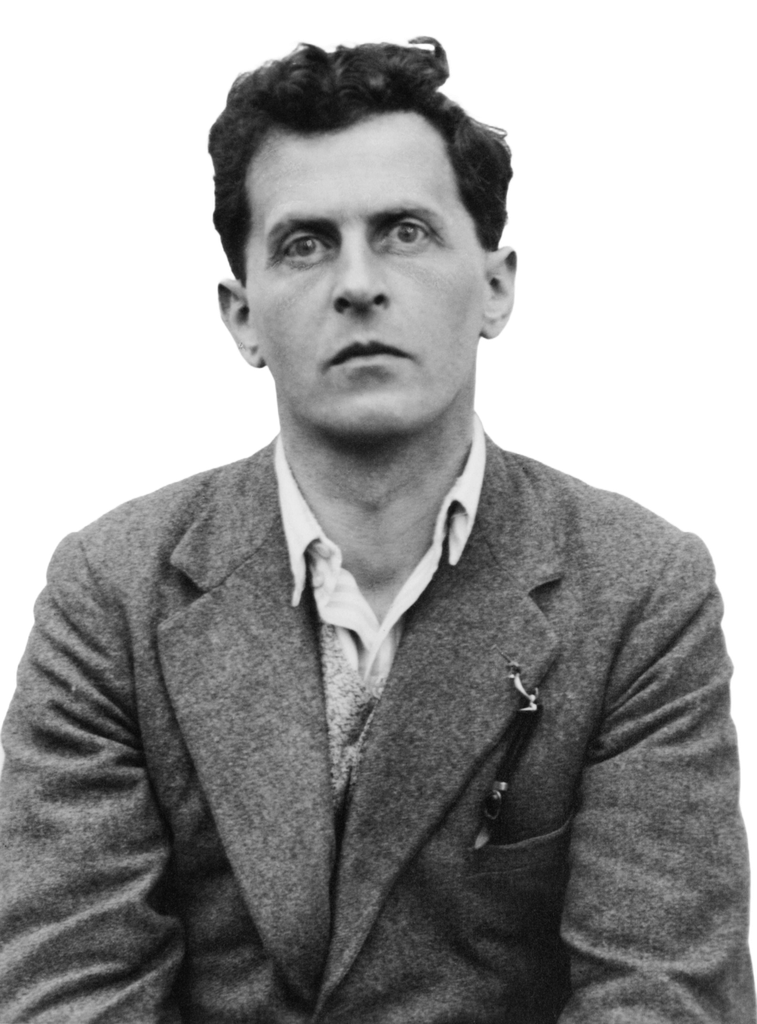
Arguments for religion do not meet the force of universal proof. Wittgenstein writes, “Religion says: Do this! – Think like that! But it cannot justify this and it only need try to do so to become repugnant; since for every reason it gives, there is a cogent counter‐reason.”[1]
The cosmological argument, for example, has been criticized by David Hume:
Add to this that in tracing an eternal succession of objects it seems absurd to inquire for a general cause or first author. How can anything that exists from eternity have a cause, since that relation implies a priority in time and a beginning of existence?
In such a chain, too, or succession of objects, each part is caused by that which preceded it, and causes that which succeeds it. Where then is the difficulty? But the whole, you say, wants a cause. I answer that the uniting of these parts into a whole, like the uniting of several distinct countries into one kingdom, or several distinct members into one body, is performed merely by an arbitrary act of the mind, and has no influence on the nature of things. Did I show you the particular causes of each individual in a collection of twenty particles of matter, I should think it very unreasonable should you afterwards ask me what was the cause of the whole twenty. This is sufficiently explained in explaining the cause of the parts.[2]
Neither do design arguments succeed, for as Hume says, “Can you pretend to show any such similarity between the fabric of a house and the generation of a universe?”[3] Design arguments are lacking of a method of confirmation; it is not demonstrable that there is a designer of the world, nor can it be demonstrated that it is more likely than not that the complexity of the world can only be accounted for with a designer.
While religious creeds were traditionally formed and enforced for the purpose of unity, they have many times been a source of division. Formal definitions like Dyophysitism and the Filioque in magisterial teaching have been serious causes of rupture in Church communion. There is also the problem of doxastic involuntarism. Doxastic involuntarism means that beliefs are not freely chosen. It is easy when raising children to instill in them values and beliefs because they are primed to receive them. But depending on a person’s temperament, adults may have more difficulty in willfully forming new beliefs. Some people may find Pascal’s advice true:
[I]f you are unable to believe, it is because of your passions, since reason impels you to believe and yet you cannot do so. Concentrate then not on convincing yourself by multiplying proofs of God’s existence but by diminishing your passions. You want to find faith and you do not know the road. You want to be cured of unbelief and you ask for the remedy: learn from those who were once bound like you and who now wager all they have. These are people who know the road you wish to follow, who have been cured of the affliction of which you wish to be cured: follow the way by which they began. They behaved just as if they did believe, taking holy water, having masses said, and so on. That will make you believe quite naturally, and will make you more docile.[4]
But even if such a method would produce desired beliefs in every person who follows it, this may be rejected on the grounds that it is a form of autosuggestion. Wittgenstein writes,
I believe that I should not be superstitious, that is, that I should not perform magic on myself with words I may be reading, that is, that I should and must not talk myself into a sort of faith, a sort of unreason. I shall not sully reason.[5]
Wittgenstein suggests that it may be better if talk of belief in relation to religion is avoided:
I believe: the word “believing” has wrought horrible havoc in religion. All the knotty thoughts about the ‘paradox’ of the eternal meaning of a historical fact and the like. But if instead of “belief in Christ” you would say: “love of Christ”, the paradox vanishes, that is, the irritation of the intellect.[6]
Some people worry that having the wrong belief is a damnable offense, as is the case with Pascal’s wager. But this seems contrary to Jesus’s cry from the cross, “Father, forgive them, for they do not know what they do.”[7] We are in the dark about divine things, “For now we see in a mirror, dimly, but then we will see face to face.”[8] It may turn out to be that the uncertainty of religious propositions that lack historical confirmation and beliefs that conflict with other religions are dissolved at death. That is, something like the experience of the beatific vision may make the importance attached to religious propositions melt away because these propositions are ultimately for the purpose of giving us hope for a future life with God. We may never even think about religious propositions that we held while alive after death, and so religious disagreements may have no place after death.
Another difficulty with religious belief is how to conceive of God. Wittgenstein writes, “To believe in a God means to see that the facts of the world are not the end of the matter.”[9] There are a number of ways to interpret this, but I take it to mean that believing “that the facts of the world are not the end of the matter” means that one believes in God. In other words, belief in God does not necessitate a belief in an omnipotent entity or thing. If the traditional view of God as ineffable is correct, we cannot say what God is. Rather, recognizing there is a mystery of the world is sufficient to say that one believes in God. Only if one holds there are no other facts besides the world can one be considered an atheist in the strong sense.
This mystery of the world relates well to Marcel’s definition of mystery, for we cannot solve the mystery of the world as we would a problem. It is something that is there with us, and answers that we give are not ultimate, for they are not provable, at least not in this life.
To say that the world is a mystery is synonymous with being a theist may strike a strong religious believer as blasphemous, for a mystery is an abstraction, not a concrete being. The Christian holds that God truly exists in the most real sense, being omnipotent, omniscient, omnibenevolent, etc. But I think it is mistaken to think that someone who is only able to confidently say the world is a mystery and nothing else about God is not a theist. On the contrary, one who says the world is a mystery agrees with the bare minimum of what God is, for the mystery of the world is necessarily transcendent, something beyond the world because the answer is not in the world, something to be discovered through empirical investigation. This bears similarity to the claim that Christians and Muslims believe in the same God, but it is their understanding of God that is different. One who only believes the world is a mystery remains agnostic as to what the nature of the mystery is, partly because the transcendent nature of this mystery is for most people not directly accessible. Those who believe they have achieved direct access with God are typically those who have had ineffable spiritual experiences, such as mystics or people who have had near-death experiences or shared-death experiences. But one who has not been exposed to these experiences, either personally or through testimony, is limited in what they can say about the mystery, and so are not yet able to confidently say what the nature of this ultimate mystery is; divine being, superessential essence, or any other term provided in an attempt to comprehend what God is, as something wholly different than anything we encounter in this world. Many religious believers believe any terms we use are ultimately insufficient, and people who can only say there is a mystery of the world agree with this.
Another way to conceive of God is as a form of experience. God as experience can be seen in Sofya Kovalevskaya’s recollections of Fyodor Dostoevsky:
“There is a God—there is!” Dostoevsky finally shouted, beside himself with excitement. Just at that moment the bells of the neighboring church began to peal for holy matins. The very air resounded and vibrated.
“And I felt,” said Fyodor Mikhailovich, “that heaven had descended to earth and swallowed me. I truly attained God and was penetrated by him. ‘Yes, there is a God!’ I cried out—and I remember nothing after that.
“All you healthy people,” he went on, “don’t even begin to understand what happiness is, the happiness that we epileptics experience during the instant before our attack. Mohammed maintains in his Koran that he saw Paradise and was in Paradise. All the clever fools are convinced that he was simply a liar and a fraud. Not at all! He was not lying. He was actually in Paradise in a fit of epilepsy, which he suffered with just as I do. I don’t know whether that bliss lasts for seconds or hours or months, but believe me, I wouldn’t exchange all the joys life can offer for that bliss!”[10]
Believers and unbelievers may have spontaneous moments of doubt or revelation. As John Caputo writes,
Next, as regards the self, everything about postmodernism implies that we do not know who we are, quaestio mihi factus sum, that at best we can “rightly pass” for a believer or a non-believer. Every time I say “credo” there is a voice within me that contradicts that faith and insists it does not believe a thing. Even so, those who say they disbelieve or do not believe must confess that they are haunted from within by another voice, one that fears that unbelief has forever closed itself off from the depth of things, from a wisdom both ancient and beautiful. “I” am a multiplicity of voices competing within me so that what I call the “I” is at best a shorthand for the one who does the talking, like a committee chairperson who speaks for the committee and gets to put his own slant on things and who in the process conceals how much dissent and how many competing voices there are back on the committee. Being at odds with ourselves is not so much part of being a self, or something we just have to put up with; it is pretty much what we mean by a “self,” whereas a dull mono-vocal settled self-identity is pretty much what we mean by a post.[11]
Pope Benedict XVI similarly writes,
Just as we have already recognized that the believer does not live immune to doubt but is always threatened by the plunge into the void, so now we can discern the entangled nature of human destinies and say that the nonbeliever does not lead a sealed-off, self-sufficient life, either. However vigorously he may assert that he is a pure positivist, who has long left behind him supernatural temptations and weaknesses and now accepts only what is immediately certain, he will never be free of the secret uncertainty about whether positivism really has the last word. Just as the believer is choked by the salt water of doubt constantly washed into his mouth by the ocean of uncertainty, so the nonbeliever is troubled by doubts about his unbelief, about the real totality of the world he has made up his mind to explain as a self-contained whole.[12]
I think a natural extension of these observations is this quote from Hume: “Or how do you mystics, who maintain the absolute incomprehensibility of the Deity, differ from skeptics or atheists, who assert that the first cause of all is unknown and unintelligible?”[13] That a hard distinction between theist and agnostic can be blurred can be seen in the work of Anselm, who writes, “O Lord, thou art not only that than which a greater cannot be conceived, but thou art a being greater than can be conceived.”[14] Anthony Kenny comments on this strange remark:
How can Anselm avoid the conclusion that the word ‘God’ is meaningless? How is it possible to know what a word means if what it means cannot even be thought about? If a thing is ineffable, what is one saying when one tries to identify the thing? Anselm attempts to make a distinction between understanding words and understanding the thing which they describe. But this distinction can only be effective if the things in question are to some extent describable and to that extent are not ineffable, as Anselm believed that God was.[15]
Because of the fickleness of belief, I think a form of life—such as participating in a religious community—is more significant than impervious intellectual conviction of religious propositions, for a form of life can be followed even during a dark night of the soul, a night that may extend for the entirety of a person’s life.
Following a religion does not need intellectual certainty, the kind of certainty we hold for ordinary beliefs (“I am certain two plus two is four and I cannot be wrong”). Following a religion may completely lack this kind of certainty and there can be serious doubt as to the truths of the propositions the religion expounds. But a person can choose to follow a religion, to make an existential choice in taking on a religious form of life without conviction of the truth behind it, that is, a non-doxastic faith. “And faith is faith in what my heart, my soul, needs, not my speculative intellect.”[16] Wittgenstein further writes,
For a sound doctrine need not seize you; you can follow it, like a doctor’s prescription. – But here you have to be seized & turned around by something. –(I.e. this is how I understand it.) Once turned around, you must stay turned around.
Wisdom is passionless. By contrast Kierkegaard calls faith a passion.
Also,
It appears to me as though a religious belief could only be (something like) passionately committing oneself to a system of coordinates. Hence although it’s belief, it is really a way of living, or a way of judging life. Passionately taking up this interpretation.[17]
By treating religious belief of passionately taking up a form of life instead of treating religious belief as something requiring epistemic certainty, the problem of religious belief and doubt dissolves.
[1] Jareño-Alarcón, Joaquín. Ludwig Wittgenstein: The Meaning of Life (p. 126). Kindle Edition.
[2] Hume, David. Dialogues Concerning Natural Religion (Second Edition) (Hackett Classics) (p. 56). Kindle Edition.
[3] Hume, David. Dialogues Concerning Natural Religion (Second Edition) (Hackett Classics) (p. 22). Kindle Edition.
[4] Pascal, Blaise. Pensees (Penguin Classics) (pp. 124-125). Kindle Edition.
[5] Jareño-Alarcón, Joaquín. Ludwig Wittgenstein: The Meaning of Life (p. 113). Kindle Edition.
[6] Jareño-Alarcón, Joaquín. Ludwig Wittgenstein: The Meaning of Life (p. 122). Kindle Edition.
[7] Luke 23:34.
[8] 1 Corinthians 13:12.
[9] Jareño-Alarcón, Joaquín. Ludwig Wittgenstein: The Meaning of Life (p. 26). Kindle Edition.
[10] Sofya Kovalevskaya, A Russian Childhood, trans. Beatrice Stillman (New York: Springer-Verlag, 1978),178.
[11] Caputo, John. John D. Caputo: The Collected Philosophical and Theological Papers: Volume 5: 2005–2007: Coming Out as a Theologian (p. 341). Kindle Edition.
[12] Ratzinger, Joseph Cardinal; Pope Benedict XVI; Benedict. Introduction to Christianity (Communio Books) (p. 36). Kindle Edition.
[13] Hume, David. Dialogues Concerning Natural Religion (Second Edition) (Hackett Classics) (p. 28). Kindle Edition.
[14] https://ccel.org/ccel/anselm/basic_works.all.html
[15] Anthony Kenny, “WORSHIPPING AN UNKNOWN GOD,” Ratio XIX 4 December 2006 0034-0006, 445-446
[16] Jareño-Alarcón, Joaquín. Ludwig Wittgenstein: The Meaning of Life (p. 131). Kindle Edition.
[17] Jareño-Alarcón, Joaquín. Ludwig Wittgenstein: The Meaning of Life (p. 173). Kindle Edition.
Leave a Reply
You must be logged in to post a comment.